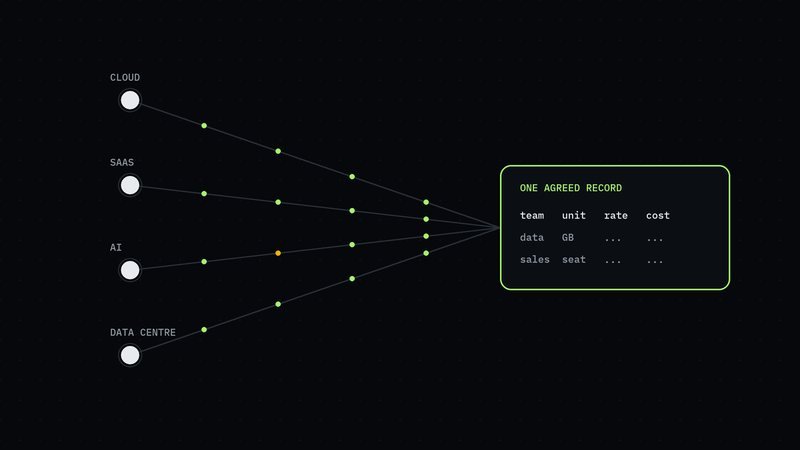
Ask most finance teams what the organisation spends on AI and you'll get a number. Ask what one use of AI costs, one drafted proposal or one answered support ticket, and the room goes quiet. The bills arrive from several places, each in its own format, and none of them is written in the units the business actually cares about.
That gap matters more every month. The FinOps Foundation's 2026 survey of its members found that 98% of FinOps teams now manage AI spend, up from 31% two years earlier 1. Most of those respondents work in larger organisations, but the shift is the same everywhere: AI has moved from an experiment to a normal line in the technology budget, and it's being asked the same questions as every other line.
Why AI bills surprise people
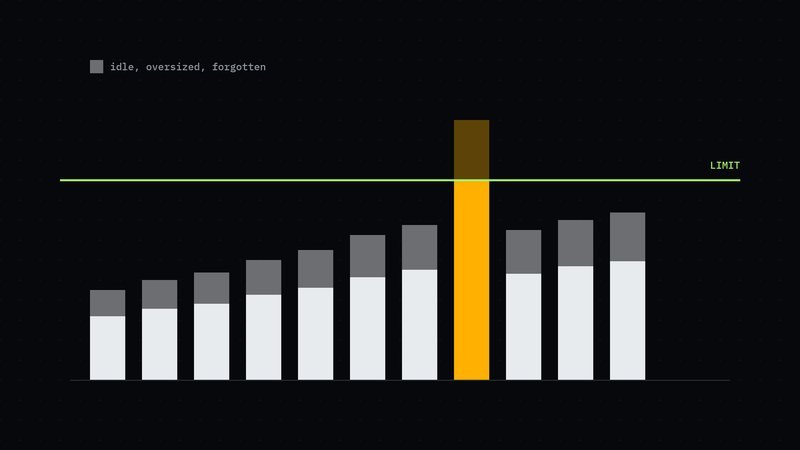
Most technology costs grow slowly and predictably: a new hire gets a laptop and a few licences. AI costs don't behave like that. Some are fixed per person, some grow with every request, and some don't appear on any bill at all because they arrived inside software you already pay for. A busy month, a new automated workflow or one long-running agent can move the total in days.
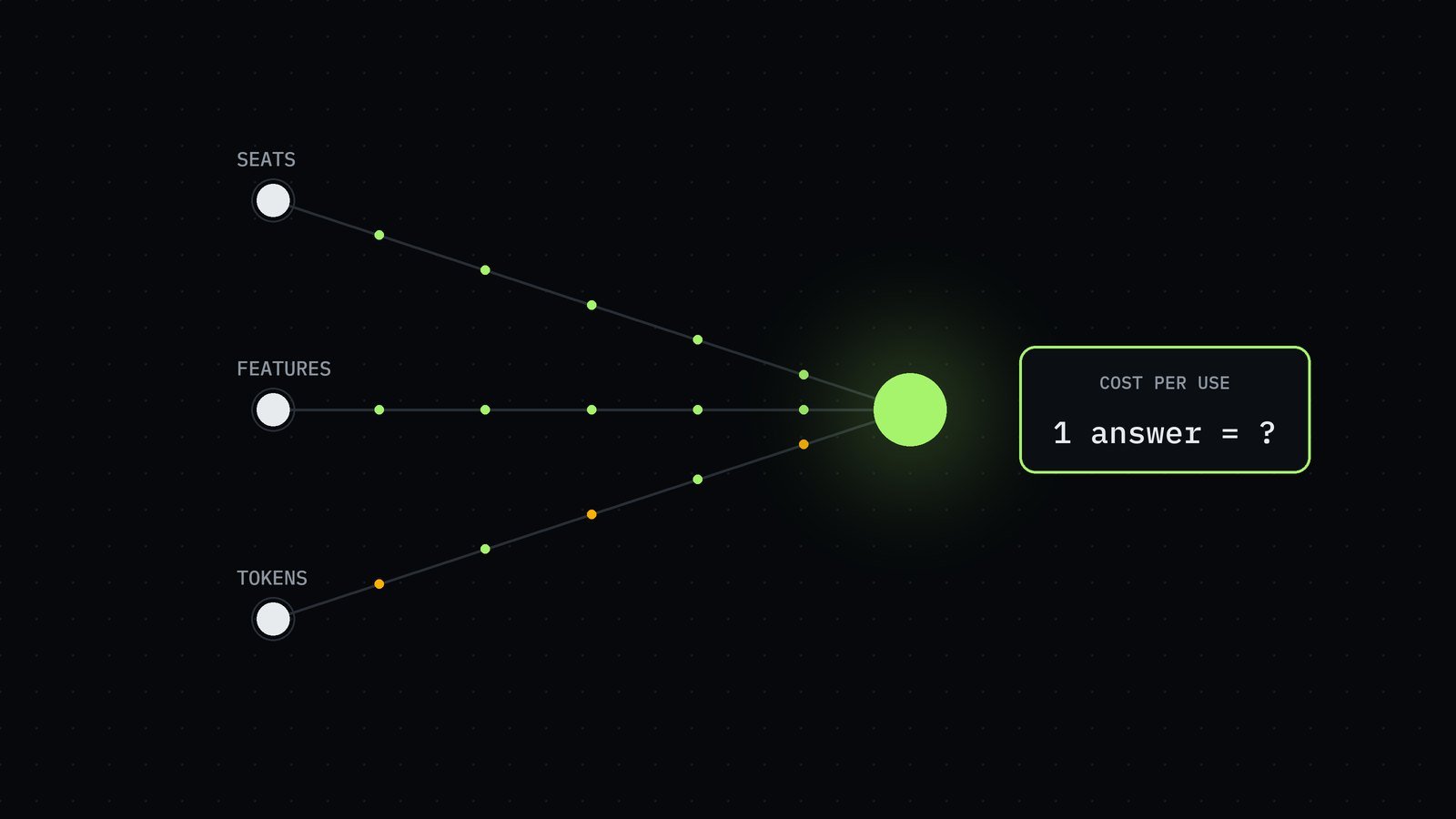
The three places AI cost hides
- Tools bought by the seat. A monthly subscription per person for an AI assistant or chat tool. Easy to see on the bill, hard to judge, because the price is the same whether someone uses it every hour or never.
- AI features inside software you already pay for. Office suites, customer systems and design tools have added AI features. Sometimes they're included in a price rise, sometimes they're a paid add-on, sometimes they're switched on by default. Either way, they rarely appear as a separate "AI" line.
- Usage bills for tokens or requests. When your own systems or developers call an AI model directly, the provider charges for what's used. This is the part that can grow fastest, and the part most closely tied to how the work is designed.
If you count only the invoices with "AI" in the name, you'll miss most of the second group. If you count only subscriptions, you'll miss the third.
Cost per use, explained with tokens
Usage bills are usually counted in tokens. A token is a small piece of text, roughly a word or part of a word. The provider counts the tokens you send in and the tokens it sends back, and charges for both.
That's why the same task can cost very different amounts. A short question with a short answer uses few tokens. The same question with a fifty-page document attached, a long answer, and three rounds of follow-up uses many more. Nothing about the task's name changed; the amount of text did.
The useful measure isn't the token, though. It's the cost per use: what one unit of real work costs. The unit might be one summary, one support reply, one drafted contract clause or one analysed invoice. Once the unit is agreed, every kind of AI cost can be expressed in it, seat subscriptions included: divide the subscription by the uses it actually produced. A seat used twice a month can turn out to be the most expensive AI you have.
The FinOps Foundation calls this approach token economics, or tokenomics: metering AI by use and tying it to the value it creates. Our Tokenomics page explains it in more depth.
A one-week first count
You don't need a project to begin. One week and a spreadsheet will do.
- List every AI use you can find. Ask finance for invoices and card spend, IT for systems with AI features switched on, and team leads for the tools their people actually use.
- Sort each into the three places above, because each is counted differently.
- For usage bills, get the token or request counts. Most providers offer an export. Where one doesn't, write the gap down.
- Agree one unit of work per use, in words the team would use themselves. If people can't explain the unit, they won't trust the number.
- Fill one table: the use, the supplier, the cost type, the owner, the unit, the monthly cost, the cost per use, and what's still unknown.
The first table will have gaps. That's fine. It's the first map, and the gaps show you where to ask next.
What good looks like
Good looks like every AI cost having two things: an owner, who can say whether it's worth it, and a unit, which makes the cost comparable. With both in place, a finance lead can answer the question that matters: which team spent what, and what did it produce?
That question is still hard for most organisations. In the Tokenomics Foundation's 2026 survey, 39% of respondents were not confident they could connect AI spend to a measurable business outcome their CFO would accept. When asked what they wanted from AI providers, 23% asked for more transparency and more detailed data, and only 4% asked for cheaper prices 2. The first problem is seeing the cost clearly. Price comes later.
Owners and units also make the next step possible: deciding which uses to grow, which to redesign so they use fewer tokens, and which to stop.
Sources
- FinOps Foundation, State of FinOps 2026, data.finops.org, 1,192 respondents. Read 04/10/2026.
- Tokenomics Foundation, State of Tokenomics, 23/09/2026, 472 respondents. Read 06/10/2026.