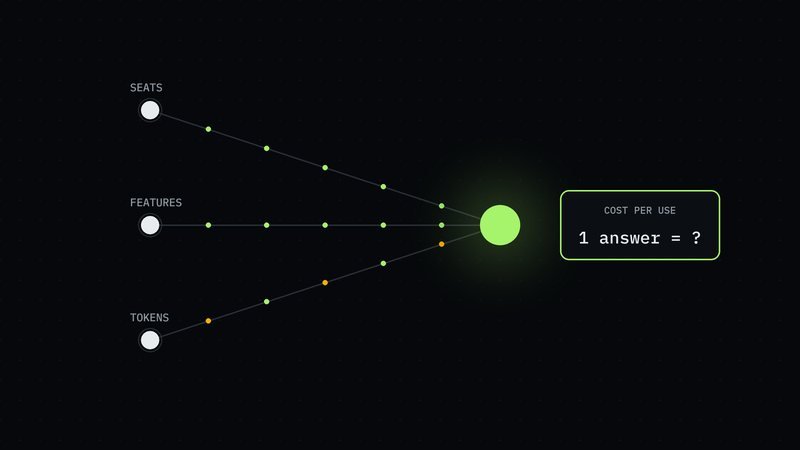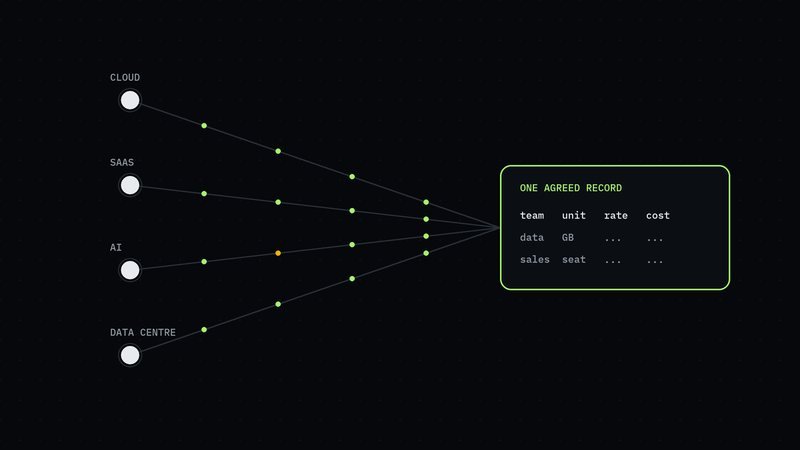
The cloud bill goes up again this quarter. Finance asks why. The platform team says usage grew, which is true, but nobody can point to the lines that grew without anyone deciding they should. The bill is accurate to the cent and still doesn't explain itself.
That's normal. A cloud bill is thousands of small charges that each made sense when someone switched them on. Some still earn their keep. Some stopped earning it months ago and kept running, because nothing in the cloud switches itself off.
How much is wasted
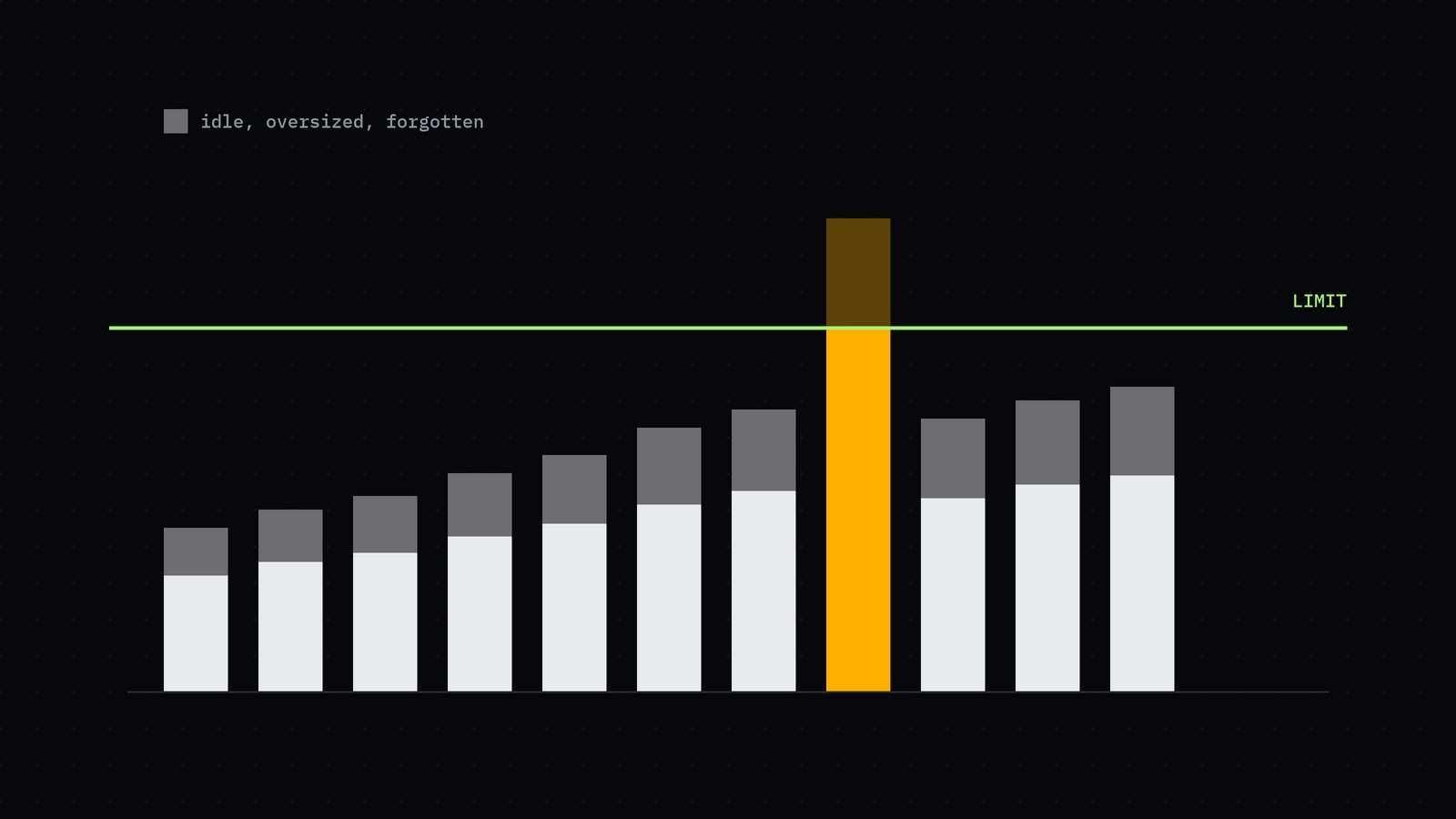
Each year the software company Flexera asks cloud users how much of their infrastructure and platform spend they think is wasted. In 2026 the answer was 29%, the first rise in five years 1.
Two things are worth knowing about that number. It's the respondents' own estimate, not a measurement. And Flexera sells cost-management software, so it has an interest in the problem looking large. Even so, it's a useful starting point. If roughly a quarter of your bill had no one deciding it should be there, would anyone notice?
The five usual places
Waste tends to collect in the same five places. None of them is dramatic, which is why they last.
- Resources left running when idle. A test environment built for a project that finished in spring. A database copy made for one report. They're charged by the hour, every hour, whether anyone uses them or not.
- Machines bigger than the work needs. Teams pick a size with room to spare, because running out of room at the wrong moment is worse than paying extra. The room to spare is paid for every month, and it rarely gets revisited.
- Storage and backups nobody deletes. Storage is cheap per gigabyte, so nobody tidies it. Old snapshots, logs and copies pile up quietly, and the total isn't small any more.
- Data transfer. Moving data between regions, between services or out to the internet can carry a charge. It happens inside normal work, and it shows up on a line most people don't recognise.
- Commitments bought but not used. Cloud providers discount usage you commit to in advance. If the use doesn't arrive, because a project moved or a workload changed, you pay for the commitment anyway.
One simple test catches most of them: pick any line on the bill and ask who can say what it's for. If nobody can, you've found a place to look. A good first pass is to sort last month's bill by cost, take the twenty largest lines, and put a name next to each one.
A cost with no owner never shrinks
Waste isn't usually a technical problem. It's an ownership problem. Switching off an idle server takes a minute. Deciding that it's safe to switch off takes someone who knows what it was for, and that person is often hard to find.
That's why the first lasting fix is simple to say: give every cost an owner. The owner doesn't have to be in finance. Usually it's the team that runs the service, because they know whether it still matters. Finance needs the totals; the owner knows whether the cost is earning its place.
Ownership also changes the question people ask. "Why is cloud so expensive?" has no answer. "Why does this service cost this much for this team this month?" does. And once a cost has an owner, it can be compared with what it delivers. Some expensive services are worth every cent. Others aren't, and only the owner can say which.
Quick wins, then habits
There are two kinds of saving, and you want both.
Quick wins come from a single clear-out: switch off what's idle, resize what's oversized, delete what nobody needs, and check commitments against real use. They show results within the next bill or two.
Write down what the clear-out found and who decided each change. The next review then starts from that list instead of from a blank page, and you can show finance what moved and why.
Habits stop the waste coming back: every new resource gets an owner and a label when it's created, someone looks at the bill every month rather than every quarter, and unusual jumps get a question the week they appear.
The FinOps Foundation, the industry body behind the FinOps Framework, describes this as a maturity model with three stages, Crawl, Walk and Run, and advises organisations to "start small, and grow in scale, scope, and complexity" 2. In practice that means a clear-out of one account or one team first, then the habits, then the rest of the estate. Nobody needs to begin at Run.
Where AI fits in
Cloud bills now carry AI costs too: model usage, GPU time and the storage that feeds them. They arrive on the same bill but behave differently, because they grow with every request rather than with the number of servers. Treat them as their own line with their own owner, or they'll hide inside the total like everything else. We cover that in What does our AI actually cost?
Sources
- Flexera, 2026 State of the Cloud, press release of 18/03/2026, survey of 750+ respondents; waste is the respondents' own estimate. Read 04/10/2026.
- FinOps Foundation, FinOps Framework maturity model, finops.org/framework/maturity-model. Read 04/10/2026.