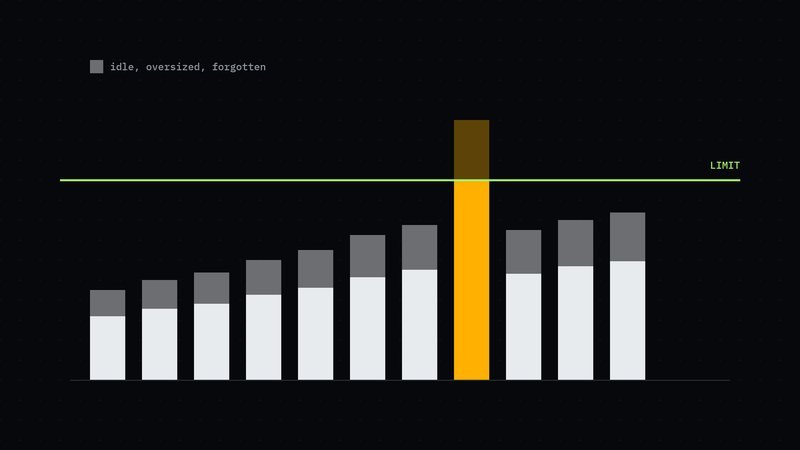
The word keeps coming up. The platform team mentions it when the cloud bill jumps. A supplier puts it on a slide. Someone suggests the company "needs a FinOps practice". If you run finance, you're probably the person expected to own the number at the end of it, and nobody has quite explained what it is.
Here is the short version, then the parts that matter to finance.
What FinOps is
The FinOps Foundation, the industry body that maintains the FinOps Framework, defines it like this:
"FinOps is an operational framework and cultural practice which maximizes the business value of technology, enables timely data-driven decision making, and creates financial accountability through collaboration between engineering, finance, and business teams." 1
In plain words: FinOps is a way of working, not a product you buy. It puts the people who use technology and the people who pay for it in the same conversation, with the same numbers, often enough to act on them.
Three phrases in that definition matter to a finance leader:
- Business value of technology. The aim isn't the lowest bill. It's spending where the money earns its keep, and being able to show which spending that is.
- Timely. Monthly or even daily figures, not an annual budget compared with an annual invoice.
- Financial accountability through collaboration. Each team sees and answers for the cost of what it uses. Finance sets the rules and keeps the totals; it doesn't have to judge every server.
It isn't only about cloud any more
FinOps grew up around cloud bills, which change by the hour and arrive in formats few finance teams enjoy. That's no longer its whole scope. In the FinOps Foundation's 2026 survey of its members, 98% of FinOps teams said they now manage AI spend, up from 31% two years earlier. 90% manage SaaS spend (software paid for by subscription) or plan to, and 48% bring the costs of their own data centres into the same practice 2.
Those respondents work mostly in larger organisations, so treat the figures as a direction rather than a benchmark for your company. The direction is clear, though: FinOps has become the way organisations manage technology spend as a whole, with AI as the fastest-moving part.
Start small: Crawl, Walk, Run
The FinOps Foundation describes maturity in three stages, Crawl, Walk and Run, and its advice is to "start small, and grow in scale, scope, and complexity" 3. No organisation is expected to begin at Run.
In practice, a sensible start for a finance team is narrow: one cost area, such as the main cloud account or the AI tools, with an owner for each large cost and a monthly look at what moved and why. Once that works, add the next area. The framework is deliberate about this, because a practice that tries to cover everything at once usually stalls.
One layout for every bill
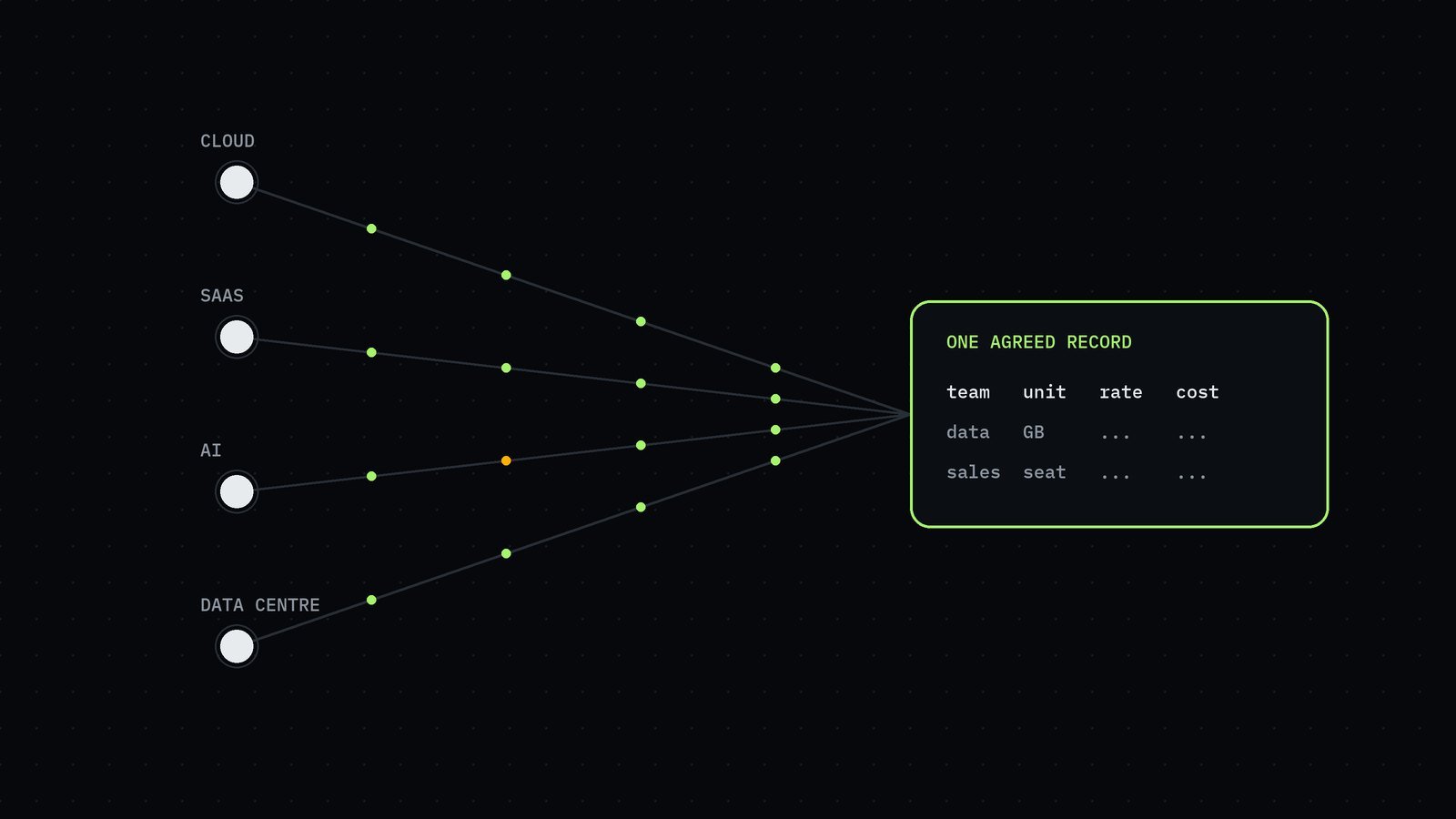
One of the most practical things FinOps offers finance is FOCUS, a common layout for bills from the FinOps Foundation. Today a cloud invoice, a SaaS subscription and an AI usage statement each name their columns differently, so combining them means hours of mapping by hand. FOCUS gives them the same fields. Version 1.4 covers AI, cloud, SaaS and data-centre billing 4.
For finance, that means bills from different suppliers can be added up and compared like for like: what was invoiced, what it really cost after discounts, and which team used it.
What FinOps asks of finance
FinOps works best when finance does a few things well, rather than everything:
- Agree the units. A cost per user, per customer or per transaction, in terms the business already uses.
- Insist on owners. Every large cost has a named team that answers for it.
- Shorten the cycle. Look at the numbers monthly, and ask about unusual jumps the week they happen.
- Keep it honest. Some costs are shared and can't be split perfectly. Agree a fair rule and move on.
Three common misunderstandings
- "It's a cost-cutting project." Cutting waste is part of it, but the definition talks about business value. Sometimes the right answer is to spend more on something that clearly earns its keep, and FinOps gives you the numbers to say so.
- "It's an engineering job." Engineers make many of the decisions that create cost, so they're essential. But the definition names finance and business teams alongside them, because decisions about value sit with the business.
- "We need a tool first." Tools help once you know what you're measuring. A first version can be bill exports, a spreadsheet and a monthly meeting; choose a tool when you know what you need it to do.
Where to begin
Before any of this, you need one agreed set of facts: every system you pay for, what it really costs, and who uses it. Without that, every later conversation starts with a dispute about the numbers. That's why we usually suggest a short, scoped review first, and the practice after.
Sources
- FinOps Foundation, FinOps definition, finops.org/framework. Read 06/10/2026.
- FinOps Foundation, State of FinOps 2026, data.finops.org, 1,192 respondents. Read 04/10/2026.
- FinOps Foundation, FinOps maturity model, finops.org/framework/maturity-model. Read 04/10/2026.
- FinOps Foundation, FOCUS specification, focus.finops.org. Read 04/10/2026.